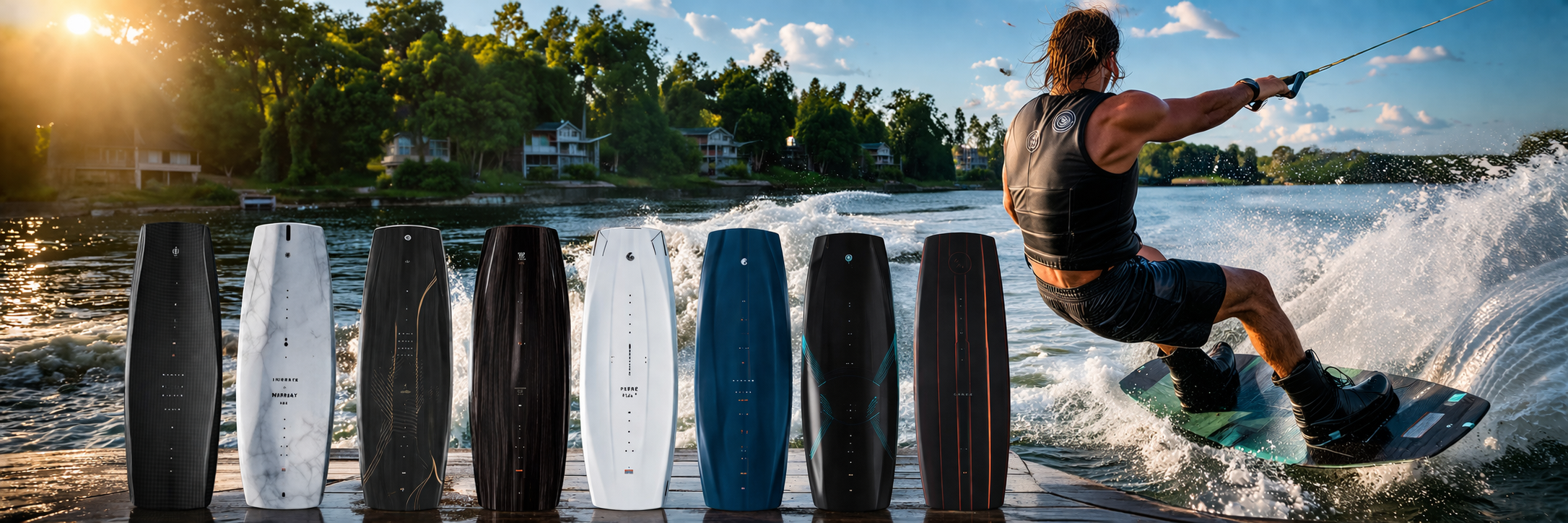
Choosing the right wakeboard size is one of the biggest factors in how a board will feel on the water. Get it right, and the board will feel stable, predictable, and easier to progress on. Get it wrong, and even a good board can feel slow, twitchy, or harder to ride than it should.
The good news is that wakeboard sizing is not complicated once you know what matters most. In almost every case, rider weight is the main factor, with skill level, riding style, and personal preference helping fine-tune the choice. In this guide, we break down a practical wakeboard size chart, explain when to size up or down, and share a few solid board recommendations for different types of riders. We will also cover why prior-year wakeboards can be one of the smartest buys on the market, especially when retailers start clearing inventory and better deals appear.
Wakeboard Size Chart by Rider Weight
If you are wondering what size wakeboard you need, start here. These ranges are a strong general guide for boat wakeboards:
- Up to 100 lbs / 45 kg: 118–130 cm
- 100–130 lbs / 45–59 kg: 130–138 cm
- 130–170 lbs / 59–77 kg: 134–142 cm
- 150–225 lbs / 68–102 kg: 138–146 cm
- 200 lbs+ / 90 kg+: 144 cm and up
This chart gives you a reliable starting point, but keep in mind that wakeboard sizing is not perfectly universal. A 140 cm in one model may suit a slightly different rider than a 140 cm in another, depending on the board’s shape, width, rocker, and overall design. That is why it is always smart to use a general chart to narrow your range, then check the manufacturer’s recommended rider weights for the specific board you are considering.
Why Rider Weight Matters More Than Height
A lot of riders search for a wakeboard size chart by height, but weight is the number that matters most. Wakeboards are sized around how much flotation and support a rider needs, and that comes down far more to weight than height.
Height can still influence preference. A taller rider may like the feel of the longer option if they are between sizes, especially if they want a more planted or stable ride. But height should be the secondary factor, not the first one. If you are deciding between two sizes, use your weight first, then think about your stance, riding style, and whether you want the board to feel more stable or more nimble.
Should You Size Up or Size Down on a Wakeboard?
For most riders, especially beginners and intermediates, it is usually better to size up slightly rather than size down.
A slightly longer wakeboard typically gives you:
- More stability
- Better flotation
- Easier deep-water starts
- Softer, more forgiving landings
- A more confidence-inspiring ride
A slightly shorter wakeboard can feel quicker edge-to-edge and a little more playful, but it can also ride lower in the water and feel less forgiving if you are already near the top of the board’s recommended weight range.
As a simple rule:
- Newer riders usually benefit from the larger option if they are between sizes
- Experienced riders may choose the smaller option if they want a more responsive feel
- Heavier riders should avoid undersizing, as too little board can make everything feel harder than it needs to
How Skill Level Affects the Right Wakeboard Size
Best sizing approach for beginners
If you are new to wakeboarding, the best choice is usually a board in the middle to upper end of your recommended size range. A little extra length gives you more stability and makes learning easier. It can help with starts, edging, balance, and early jumps.
This is also where beginner-friendly board shapes matter. Softer, more predictable boards often make progression smoother than aggressive, advanced designs.
Best sizing approach for intermediate riders
Intermediate riders have a bit more flexibility. At this stage, you can usually stay close to the recommended range and then let your preferred riding feel guide the final decision.
If you want easier landings and a more forgiving board, go slightly longer. If you want quicker response and a more compact feel, go slightly shorter, provided your weight still fits the board properly.
Best sizing approach for advanced riders
Advanced riders can be more selective. Once your fundamentals are solid, you may choose size based on swing feel, pop style, landing preference, and how aggressive you want the board to ride. Even then, the brand’s recommended weight range should still be your anchor point.
How Riding Style Changes Wakeboard Sizing
Board size is only part of the equation. Your riding style also affects what will feel best.
If you want a board that feels stable, smooth, and forgiving, leaning slightly longer often makes sense. If you like a quicker, more reactive board, a slightly shorter setup may suit you better.
In general:
- Longer wakeboards feel more stable and supportive
- Shorter wakeboards tend to feel quicker and more responsive
- Continuous rocker boards often feel faster and more predictable
- 3-stage rocker boards usually deliver a more upward, punchier pop
This does not mean one option is automatically better. It just means the “right” wakeboard size depends on what kind of ride you want, not just the number printed on the board.
Recommended Wakeboards for Different Riders
This is not a paid list or a sponsored roundup. These are simply strong examples of wakeboards that are easy to recommend because they suit common rider needs well.
Best wakeboards for beginners
Hyperlite State 2.0
A proven beginner-friendly wakeboard that is designed to help riders learn proper technique and build confidence early.
Liquid Force Trip
A long-running favorite for progressing riders thanks to its predictable feel, easy tracking, and all-around usability.
Ronix Vault
A solid entry-level to intermediate option for riders who want something approachable but still progression-friendly.
Best all-around wakeboards
Hyperlite Murray
A versatile board that works across a wide range of skill levels and remains a great pick for riders who want one board to grow with.
Ronix District
A dependable all-around board that suits many intermediate riders looking for a balanced feel and broad usability.
Best wakeboards for more aggressive riders
Liquid Force Remedy
A stronger option for riders who want a more performance-focused feel and are ready to move past beginner-oriented shapes.
Ronix RXT
A more advanced board for riders who know they want a high-energy, more aggressive ride.
Real-World Wakeboard Size Examples
To make sizing more practical, here are a few simple examples:
- A rider around 150 lbs / 68 kg will often land in the 138–140 cm range
- A rider around 180 lbs / 82 kg will often suit a 140–144 cm board
- A rider over 200 lbs / 91 kg should usually be looking at 144 cm and up
These are not hard rules, but they are useful benchmarks. Once you know your likely range, the next step is finding a board model that matches your skill level and riding goals.
Do Not Overlook Bindings
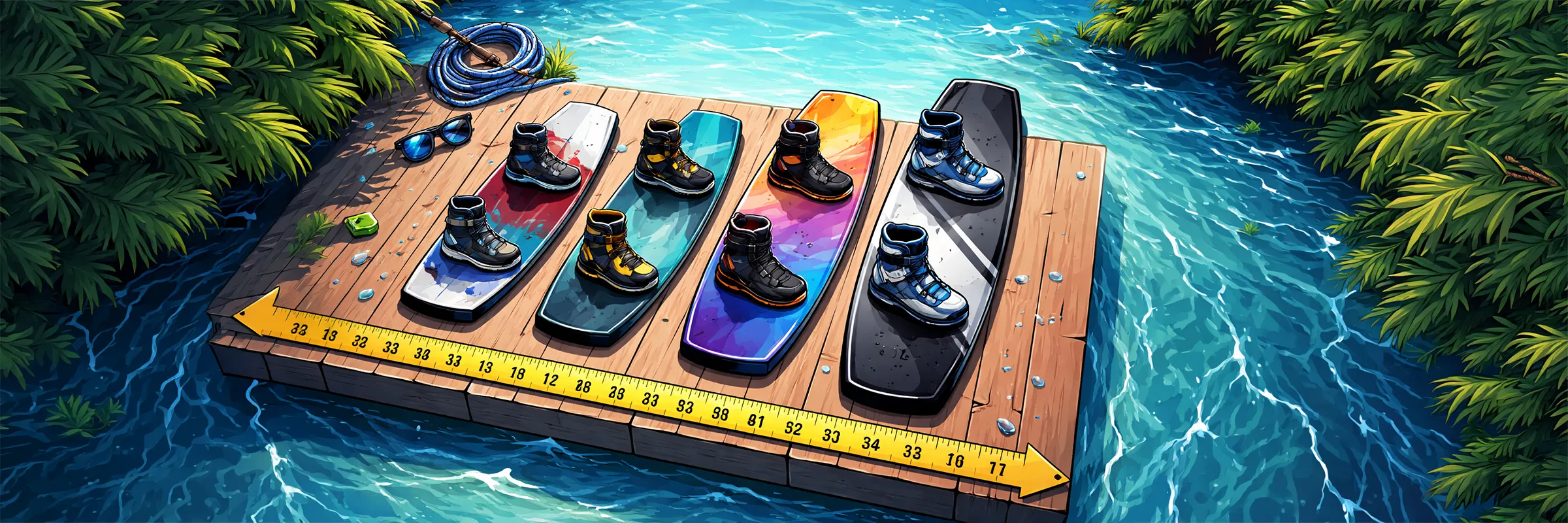
The right wakeboard size matters, but so do bindings. If your boots or bindings do not fit properly, the whole setup can feel off even if the board size is correct.
For newer riders and families, more adjustable bindings are often the best choice. For more experienced riders, a snugger and more supportive fit may be the priority. Either way, the board should still be chosen around the main rider’s weight and intended use.
Why Prior-Year Wakeboards Are Often the Smartest Buy
One of the best ways to save money on a wakeboard is to shop prior-year models. In many cases, last season’s board is still an excellent option, especially for beginner and intermediate riders. Often the biggest changes are graphics, not dramatic performance differences.
That is why retailer clear-outs can be such a great opportunity. When shops start moving older inventory, you can often find excellent wakeboards at meaningfully better prices than the newest release.
That is also where WakeFind can be genuinely useful. Instead of checking store after store to see whether an older model is still available in your size, it helps to compare options and spot deals in one place. If you are trying to stretch your budget without settling for low-quality gear, prior-year wakeboards are often the best value on the market.
Final Thoughts: How to Choose the Right Wakeboard Size
If you are trying to choose the right wakeboard, start with rider weight, not hype, branding, or graphics. Use a general wakeboard size chart to find your range, check the brand’s recommended sizing for the exact board, and then adjust based on how you ride.
For most riders, especially those still learning or progressing, the safer move is to stay in range and lean slightly bigger rather than smaller. A board with enough size underneath you will usually be easier to ride, easier to progress on, and more enjoyable session after session.
Once you get the size right, everything else gets easier. And if you can pick up a prior-year board on clearance, even better.
FAQ: Wakeboard Size Chart and Board Selection
What size wakeboard should I get for my weight?
The best wakeboard size is usually based on your weight, not your height. As a general guide, lighter riders need shorter boards and heavier riders need longer boards. Most adults will fall somewhere in the 134–146 cm range, but the exact fit depends on the board model and design.
Is it better to size up or size down on a wakeboard?
For most riders, especially beginners, it is better to size up slightly if you are between sizes. A slightly longer board usually gives you more stability, easier starts, and softer landings.
Does height matter for wakeboard sizing?
Height matters a little, but weight matters much more. Taller riders may prefer the longer option when between sizes, but weight should always be the primary sizing factor.
What size wakeboard is best for beginners?
Beginners usually do best on a board in the middle to upper end of their recommended size range. That extra length helps make the board more stable and forgiving while learning.
Are longer wakeboards easier to ride?
In many cases, yes. A longer wakeboard generally offers more surface area, which can make starts easier, improve stability, and help with softer landings. That is why many newer riders prefer a slightly longer board.
Are prior-year wakeboards still worth buying?
Absolutely. Prior-year wakeboards are often one of the best values in the market. Many are still excellent boards, and retailers frequently discount them to clear space for new inventory. That makes them a smart option for budget-conscious riders
Related Articles:
How to Choose the Right Wakeboard for Your Kids to Learn and Progress in 2026